News
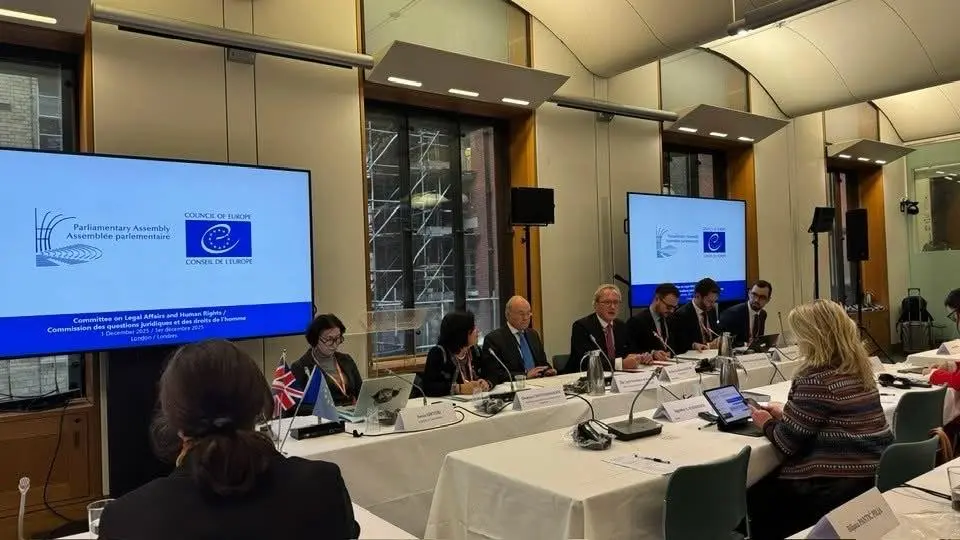
Associate Professor of Law, Member of the Hellenic Parliament for Rodopi, and Representative of Greece to the Council of Europe, Dr. Evripidis St. Stylianidis, participated on 1–2 December 2025 in the meeting of the Committee on Legal Affairs of the Council of Europe, held at the UK Parliament. In this context, he held discussions with the Deputy Prime Minister of the United Kingdom and with the Deputy Speaker of the House of Lords regarding whether the development of Artificial Intelligence will lead to new legislative initiatives or even a revision of the European Convention on Human Rights.
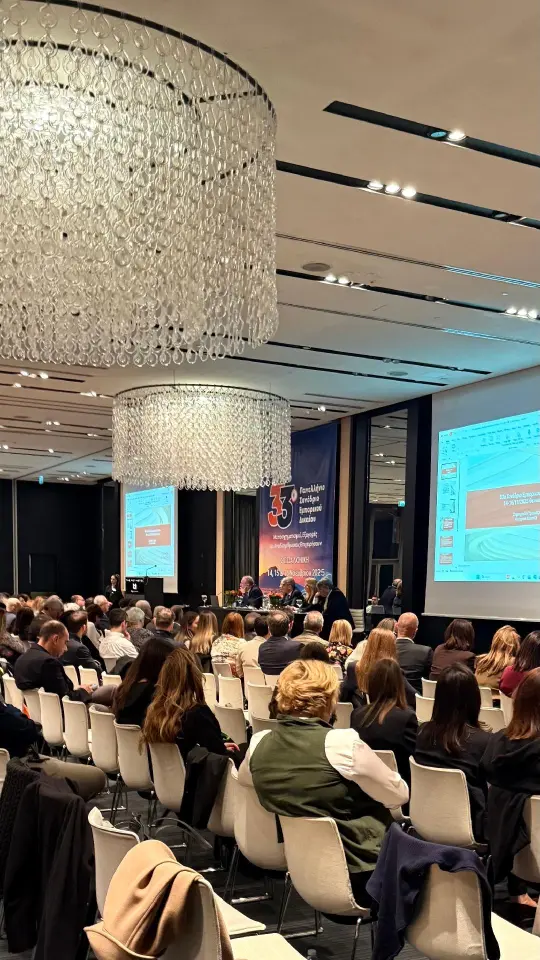
Nikolaos I. Andreadakis and Dr. Antonia A. Nikolopoulou participated in the 33rd Panhellenic Conference on Commercial Law, held on 14–16 November 2025 in Thessaloniki, where they took part in a substantive dialogue on contemporary issues of commercial law discussed during the conference.
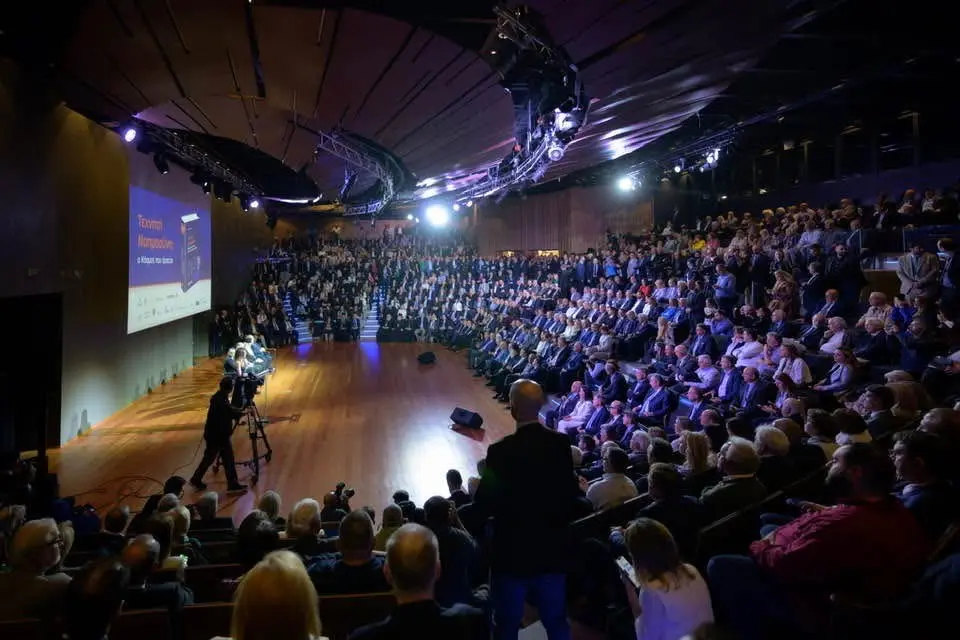

A new collective scientific volume titled “ARTIFICIAL INTELLIGENCE: Human Rights, Democracy and the Rule of Law” has recently been published by Nomiki Bibliothiki and edited by Associate Professor of Constitutional Law at the Law School of the European University Cyprus, Dr. Evripidis St. Stylianidis.
This volume represents the first attempt in Greece and the European Union to explore the dimensions of Artificial Intelligence within the framework of Human Rights, Democracy, and the Rule of Law. It brings together contributions from experts across various disciplines, offering a broad and multilayered analytical framework of the challenges and opportunities posed by AI.
The volume includes contributions by Dr. Antonia A. Nikolopoulou and Nikolaos I. Andreadakis. The first closed presentation of the volume was hosted by the Tsakos Maritime Group, while the public presentation took place at a full-house event at the Athens Conservatory, with the participation of representatives from academia, politics, and the market.
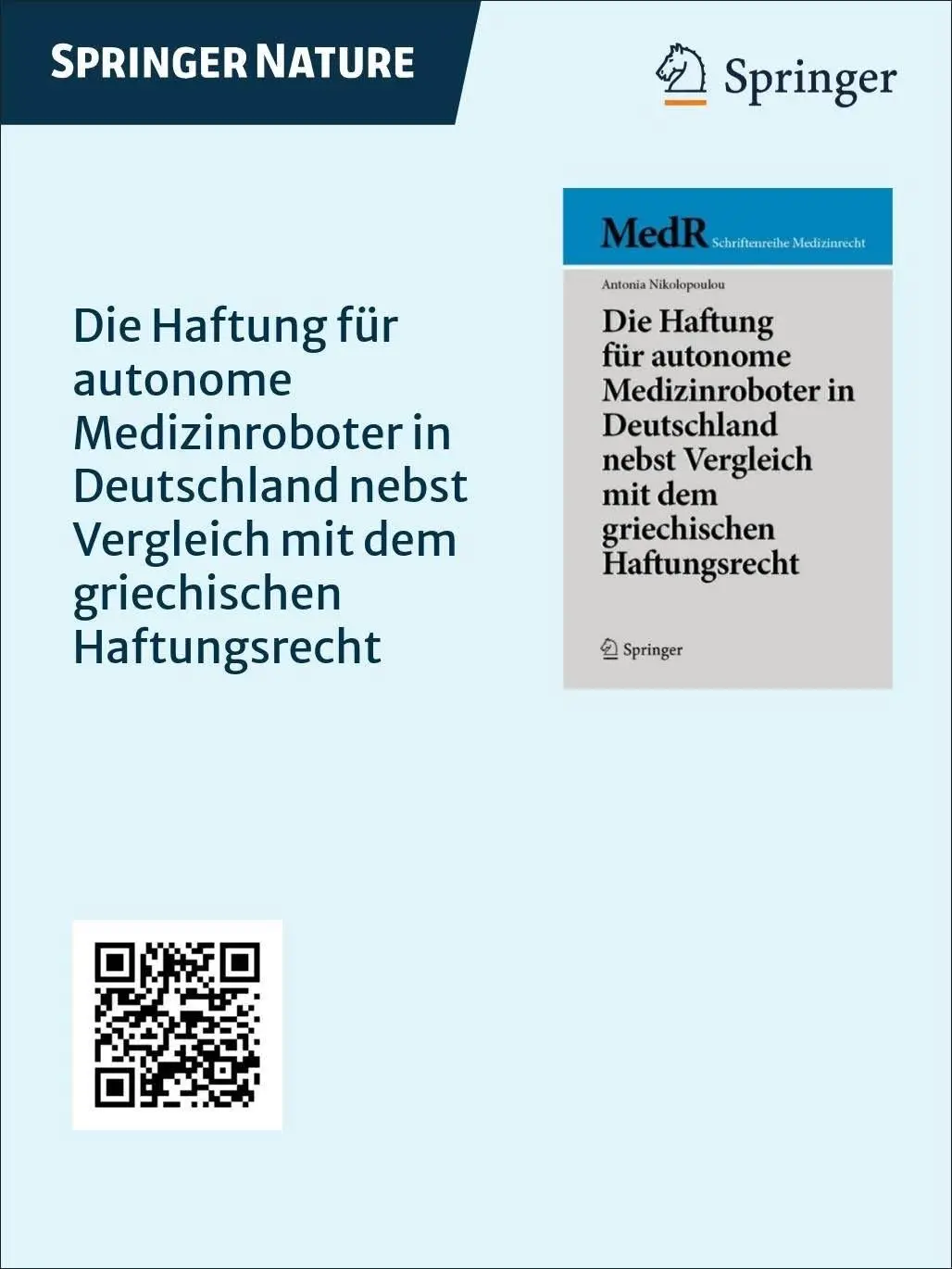
The long-term study of Dr. Antonia A. Nikolopoulou, titled Civil Liability for Medical Robots Operating with Artificial Intelligence, was recently published by Springer Nature.
At the core of this study lies the critical question: Who bears liability for potential damages in the event of a harmful incident? The physician? The hospital? The manufacturer of the robot? The person who designed or upgraded its software? The patient? The robot itself? Or perhaps another involved party?
The issue is examined under both German and Greek law and is further analyzed through a comparative legal perspective. The study identifies potential liability gaps and proposes solutions for developing a balanced model of risk allocation.
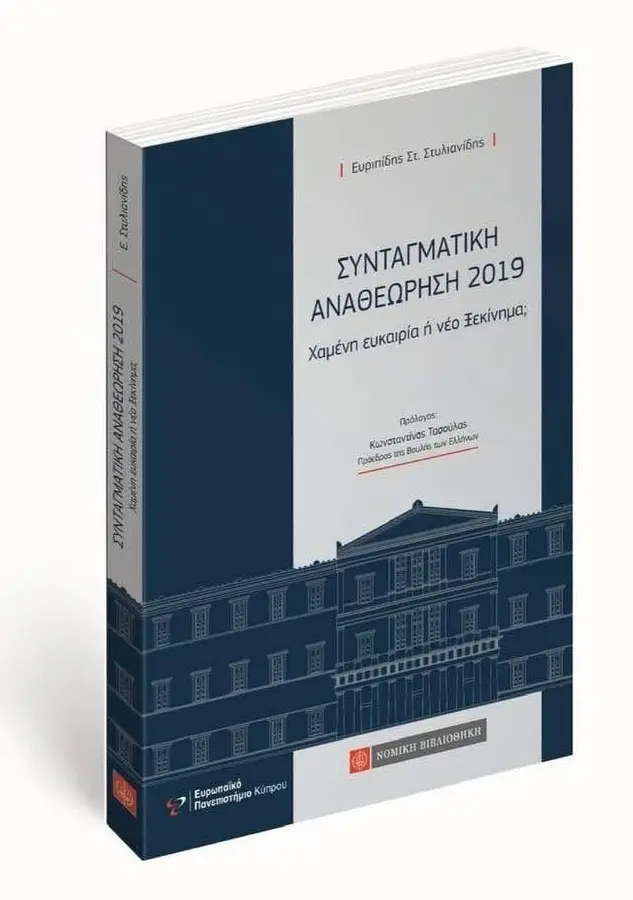
Dr. Evripidis St. Stylianidis was elected Chair of the Committee on Constitutional Revision. The revision of the Constitution was completed on 25 November 2019 with the resolution of the 9th Revisional Parliament. Nine provisions were ultimately revised—eight proposed by the Previous Parliament and submitted for discussion in the Revisional Parliament, and one adopted by the Plenary of the 9th Revisional Parliament.
Specifically:
- Article 21(1)(b): Introduces a system of minimum guaranteed income and instructs the legislature to establish its framework and conditions, ensuring dignified living standards for all citizens.
- Article 68(2): Allows for the establishment of parliamentary inquiry committees upon the proposal of at least 10 MPs and approval by at least 120 present MPs, thereby strengthening parliamentary oversight, checks and balances, and democratic accountability.
- Article 62: Restricts parliamentary immunity exclusively to acts directly related to parliamentary duties. The President of Parliament is tasked with ensuring the proper procedure and determining within three months whether the alleged acts are connected to parliamentary activity.
- Article 86(3): Abolishes the statute of limitations specific to ministers, ensuring equal treatment before the law.
- Article 96(5): Extends to members of the Military Judiciary all guarantees of functional and personal independence enjoyed by regular judges under Article 87(1), and adds legal provisions regarding rank equivalence, the composition of the Supreme Judicial Council, disciplinary boards, and inspections.
- Article 101A(2): Revises the process for appointing Independent Authorities, allowing their election by a three-fifths majority of the Conference of Presidents (instead of unanimity or a four-fifths majority) and enabling extension of terms until new members are appointed.
- Article 32(4): Decouples the election of the President of the Republic from the dissolution of Parliament. If consensus is not achieved, the President may be elected by an absolute majority, and if that too fails, by a relative majority.
- Article 54(4): Facilitates the right of Greeks abroad to vote.
- Article 73(6): Introduces and encourages Popular Legislative Initiative, creating conditions for greater citizen participation in decision-making (Semi-Direct Democracy).
Following the completion of the Constitutional Revision, a study authored by the Chair of the Parliamentary Committee on Constitutional Revision, Dr. Evripidis St. Stylianidis, titled “Constitutional Revision 2019: Missed Opportunity or New Beginning?”, was published by Nomiki Bibliothiki.
Dr. Antonia A. Nikolopoulou, Attorney-at-Law (Athens), actively participated in the necessary preparatory work for the Committee and in the editing of the above publication.